
Drone operation FAQsGuy’s and St Thomas’ NHS Foundation Trust drone delivery network
Apian is providing an on-demand, automated drone delivery network for Guy’s and St Thomas’ and SYNLAB UK&I, in partnership with Matternet. The zero-emission network is reducing costs while enhancing NHS productivity and resilience.
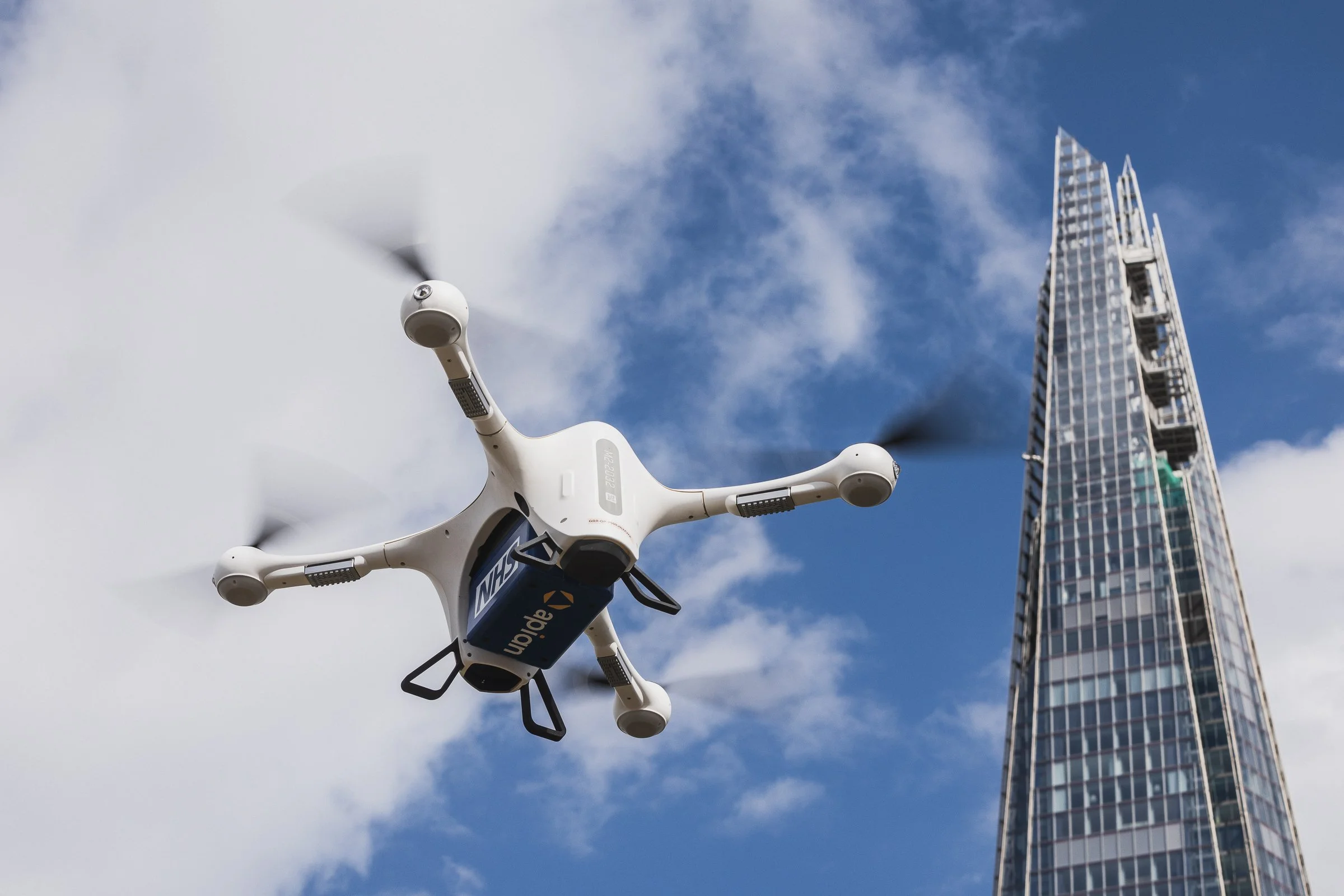
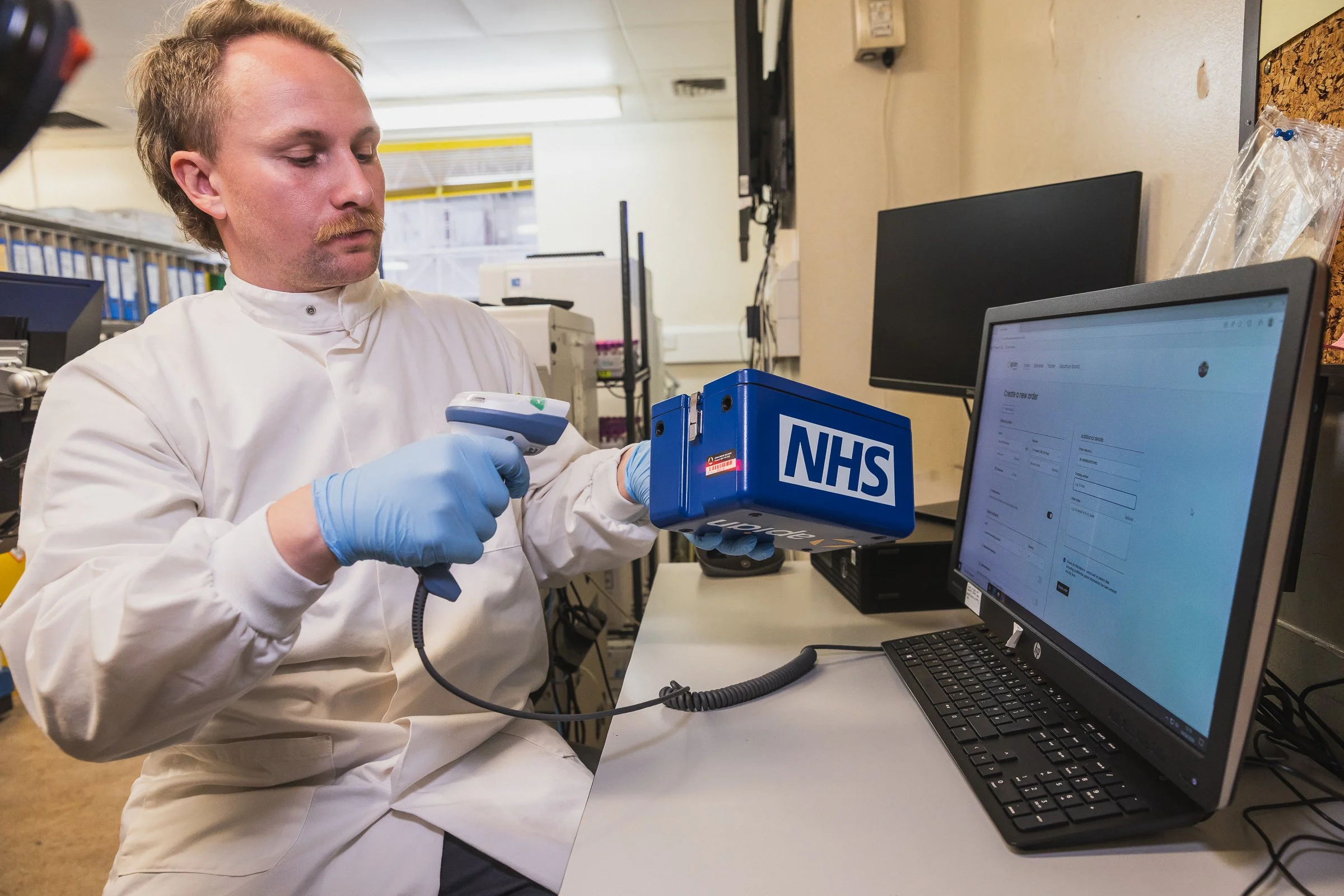
More information about this project can be found in the frequently asked questions below:
Service details
What are you transporting?
We are transporting urgent blood samples, supporting tests for patients with conditions like bleeding control disorders or transplant patients, among others. After positive progress we are now scaling up to deliver a broader range of pathology items, medicines, blood products and supplies.
When will the service take place?
The service began in October 2024 and the Civil Aviation Authority has approved the continuing operations until February 2027.
Who is the team behind this service?
This service is being run as a partnership between Guy’s and St Thomas’, SYNLAB, Apian and Matternet.
What are the benefits of medical drone delivery?
Drone delivery provides the NHS with a new class of logistics capability, delivering faster and more predictable transport for time-critical medical items such as blood, pathology samples and urgent medicines. By avoiding road congestion and staffing constraints, drones ensure that items reach the right place at the right time in support of patient care, improving reliability across clinical pathways.
When deployed within a regulated national framework, medical drones operate safely, cost-effectively and with a significantly lower environmental footprint than road-based alternatives, while also strengthening the resilience of NHS services during periods of disruption.
How often do you fly?
We fly Monday to Friday from 9am to 4pm.
Can I get a delivery to my home?
This service is exclusively for the delivery of medical products between hospitals. There will be no deliveries to individual homes.
Drone and airspace details
What are the characteristics of the drone?
The Matternet M2 is a delivery drone designed and built for safe, efficient transport in urban and suburban areas. It carries payloads of up to 2 kilograms over distances of up to 20 kilometers. With rapid battery and payload swapping, it can be ready for another delivery in under one minute. Learn more about the M2 here.
How high do the drones fly?
The drones will fly at a height of approximately 100 metres above ground level.
What route will the drone take?
The drones currently fly between Guy’s Hospital and St Thomas’ Hospital in London. They only fly within the airspace corridor approved by the Civil Aviation Authority between the two hospitals.
We will be expanding the network to additional sites, including the SYNLAB Hub pathology laboratory in Blackfriars. This will require additional airspace approvals from the Civil Aviation Authority.
How fast do they get there?
Transporting samples between Guy’s Hospital and the lab at St Thomas’ Hospital can take more than half an hour by road. Flying directly, Matternet’s drone makes deliveries in less than three minutes.
Who flies the drone?
The drones are highly automated and operate along pre-programmed flight routes. All flights are overseen by a certified and trained Pilot in Command.
Can the drone fly in bad weather?
Yes, the drones can handle typical weather conditions, including significant rain and wind. Flights are paused when conditions become too extreme to ensure safety. Our system has been used in a range of temperatures and environments, including operations in Switzerland and the US.
Are the drones safe?
Absolutely. Safety is at the heart of the Matternet system. The M2 is the world’s only delivery drone to receive a standard Type Certificate from the Federal Aviation Administration, the USA’s gold standard for airworthiness. This certification demonstrates that the M2 was designed and tested to meet the highest aviation standards. Matternet has safely completed more than 50,000 commercial deliveries across the US and Europe and continues to work closely with aviation authorities worldwide, including the UK’s Civil Aviation Authority, to uphold the same level of safety in every operation.
Do you need permission to fly?
Yes. Commercial drone delivery operations, such as these, are highly regulated by governmental agencies and require a specific operational authorisation from the Civil Aviation Authority - the same authority that regulates crewed aviation (such as passenger planes).
Additionally, airspace approval is necessary before flying to ensure safe coordination with other airspace users, such as the Police, the Armed Forces, Fire Brigades, and Air Ambulances. The UK Civil Aviation Authority has reviewed these operations and has issued our airspace approval.
Do the drones have cameras?
No. The Matternet M2 does not have any surveillance or recording capabilities.
How environmentally friendly is it?
The M2 drones are 100% electric and produce zero emissions during flight. By replacing short delivery trips that would normally require cars or vans, drone delivery helps reduce CO₂ emissions, cut down on road congestion, and make logistics more sustainable.
Will I be able to hear the drones from my home/business?
From our experience, most people do not notice the drones flying overhead. The Matternet drones fly at approximately 100 metres above ground level and can pass extremely quickly at a speed of nearly 60 km/h. While flying, the drone average noise level is lower than city sounds from ground-level and significantly quieter than a car driving by.
Further information
Who can I talk to for more information?
Whether you’re a local resident, a patient or someone who works for the NHS, we’d love to hear from you!
If you’d like to hear more about this, or have any other questions or feedback, then we encourage you to reach out to us directly at feedback@apian.health or write to us at Apian, 2-6 Boundary Row, London SE1 8HP.
